- Home
- What Life Story and Why
- How to Tell Your Life Story
- How to Tell Your Life Story
Let's Talk About Oral History
Throughout the Ages, oral history was the traditional way people learned about their ancestors. Nowadays, it is rare to use this method to pass on your family history. But, it can be a wonderful way to do so!
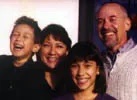
Think of the impact of hearing the voices of relatives, especially those who lived long before you, telling about their lives and their experiences. You get the opportunity to hear them, in their own voices and with the unique nuances of their personality, describe the most significant events of their lives.
It's Like Time Traveling
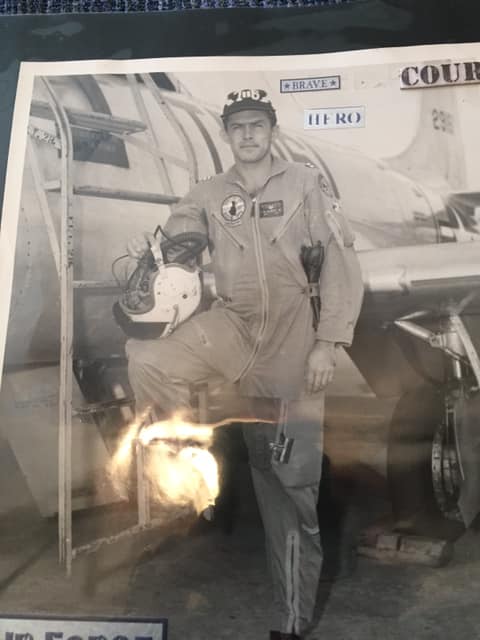
As you might imagine, the retelling of military experiences can be extremely powerful.
Veterans are sometimes kidded about telling their "war stories", but let's face it, these experiences had a lasting impact on them and sharing those experiences allows others to understand how important they are to them.
These are invaluable history lessons for future generations.
An ongoing effort to preserve their stories, the Veterans History Project, is directed by the American Folklife Center of the Library of Congress. This is an excellent oral history project and you can learn more about it here.
Today there are many ways to preserve your family history or tell your life story. This doesn't mean that oral history should be discounted. On the contrary, the improvement of recording equipment and the ability to transfer digital recordings to a computer and make a CD or DVD keepsake make audio recordings a terrific format.
If you want to capture people's stories by interviewing them you probably are interested in what kind of portable digital audio recorder you should invest in.
That's a big topic. There's quite a lot to choose from.
Much of the decision depends on 1) how much interviewing and recording you are doing and 2) what you can afford to spend.
If you are just doing it for your friends and family (and probably not as a business) you can get away with using one of the less expensive models. Most smartphones can also do a decent recording for you.
If you are recording for an organization or need to preserve the oral histories and quality standards are important then you will be looking at more advanced models. Some of the standard professional brands are Marantz, Tascam, Zoom, Edirol, Fostex and Sony. And, yes, Olympus has some higher end models, too.
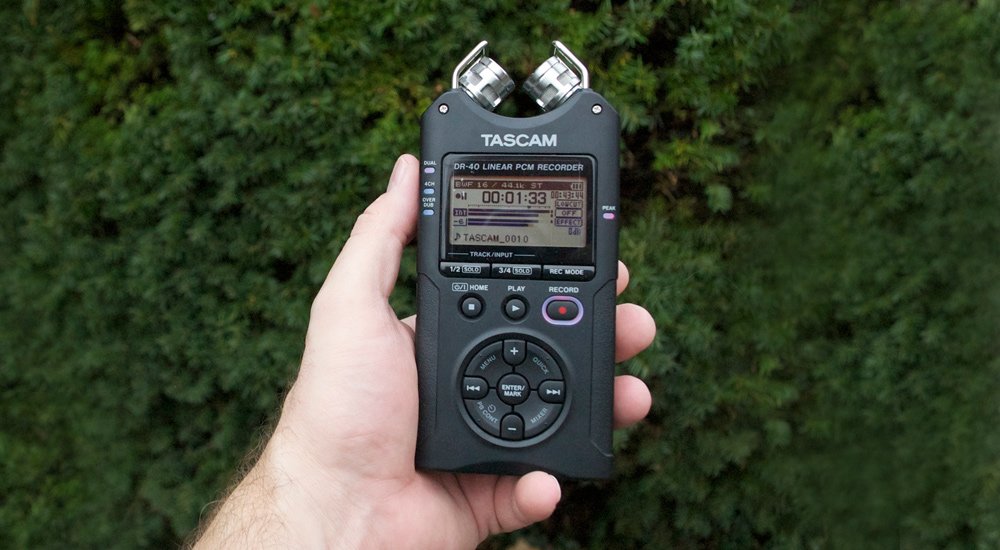
The good news is that digital audio recording advances continue to be impressive, and like computers, they seem to be getting better and better without big increases in price.
Years ago I purchased the Tascam DR-40. It has a number of excellent features, is compact enough for traveling and does a terrific job. It's also a lot of "bang for the buck". I purchased mine for just under $200, but you will need to shop around for your best deal.
You'll want to consider how much recording time your device can handle, the microphones (built in as well as input options), what format the files are preserved in, how they transfer to a computer, the size of the device...and these are just a few considerations. Don't let it overwhelm you. With the Internet it is relatively easy to research, shop and compare.
Of course once you upload your recordings to a computer you will need to transcribe, and maybe even edit, your oral histories. Once again, there are many software options, such as Audacity - you can get it here.
There are also companies who will do the transcription for you. One suggestion is the Audio Transcription Center.
Often personal historians have contacts with providers and bundle in the cost of the transcriptions as part of their service.
Before You Let the“Good Times Roll”...Prepare!
When you prepare to record an oral history consider the setting. You want the person you interview to be comfortable and ready to talk. You want to be prepared with your questions. Make sure there aren't going to be unnecessary interruptions.
Avoid background noise.
Check for open windows, the hum of a refrigerator, or noisy ceiling fans or air conditioning. Turn off the phone ringer. Make sure you aren't getting background noise like pets. Chirping birds or an occasional barking dog may not seem like a big deal at the time, but will be annoying when you playback the recording.
If you are seated at a table make sure the microphone is closest to the person you are getting the story from. If the table is glass covered or hard surface put a blanket or table cloth down to absorb sound. In addition, some rooms can have an echo, like the kitchen.
For higher quality recording consider using a lavalier microphone clipped to a lapel or clothing near the head of the person being interviewed (note: for this method you are probably using two microphones, one for the subject and the other for the person conducting the interview, so you will need a recorder with two inputs, or a splitter).
Test out the recorder with some normal conversation first and then play it back to see how it sounds. Make adjustments as necessary.
You also might need to coach the person you are interviewing. People can often trail off at the end of their sentences, particularly when recalling sensitive or emotional memories. Politely remind them to speak clearly and slowly.
You can learn more about how to do oral history through the Smithsonian Institution Archives.
Or you might want to check out Voice of Witness, which has a section on the art of oral history.
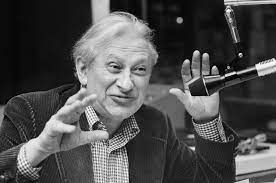
Some people are master storytellers. Studs Terkel was a great example. Check out this article from thenation.com.
In most families there is someone who typically is a good storyteller. Try approaching them about recording some of those gems from the family history.
StoryCorps is a national project to instruct and inspire Americans to record each other's stories in sound. Over the past several years StoryCorps has made great strides and even been recognized with the prestigious journalistic Peabody Award (in 2007). The project has also caught the attention of the media, and they partner with National Public Radio(NPR). Visit StoryCorps
- Home
- What Life Story and Why
- How to Tell Your Life Story
- How to Tell Your Life Story
