- Home
- Holding Onto Nostalgia
- How Nostalgia Drives Reminiscence
How Nostalgia Drives Reminiscence

There are many things that prompt our reminiscence of past events in our life. When we embark on personal history projects, such as a memoir or family history, we necessarily go through periods of reminiscing. A good Personal Historian can guide interviews so as to gather key memories. Sometimes one thing sparks another. During an interview I try to listen very carefully so that when the person suddenly remembers something important I let them run with it. My list of questions is just a guide; the story emerges from the storyteller.
How we reminisce is interesting. Sometimes we consciously do this. We decide we want to recall past events, perhaps as part of a life review. A fair amount of research has shown there is benefit in life review, particularly as we get into our elder years. It helps us make sense of our lives. Often there are personal and spiritual growth breakthroughs. It is satisfying to see that our life journey has meaning. It’s true for the pleasant times and maybe even more so for how we have dealt with our losses.

The unfortunate increase of cases of dementia (Alzheimer’s being just one type) has prompted research into ways to use nostalgia, reminiscence and life review as therapy. Because life review can often take people into recalling negative past experiences the focus tends to be more on prompting memories of positive events. It’s called reminiscence therapy and indications are it can be helpful in improving moods, self-esteem and interpersonal relationships.
Some of the key findings of the research on reminiscence are that it can lead to positive mental health and improved communication skills. It can also facilitate preparation for death and increase interaction between people, something of great concern for family members dealing with dementia.
How does nostalgia drive reminiscence? I perceive nostalgia as triggering reminiscence. The occurrence of nostalgia is quite often spontaneous, even unexpected. Smells, sights and sounds can all bring back memories, often quite pleasant as these cues stimulate the recall of past experiences. I know that the smell of fresh cut grass often brings up pleasant memories of summer days and leisure. But if I dwell on this particular cue my mind travels back to when I was fourteen and my younger brother and I spent the summer mowing lawns. It was hard, hot and sweaty work. The payoff was I bought my first set of golf clubs with my earnings.
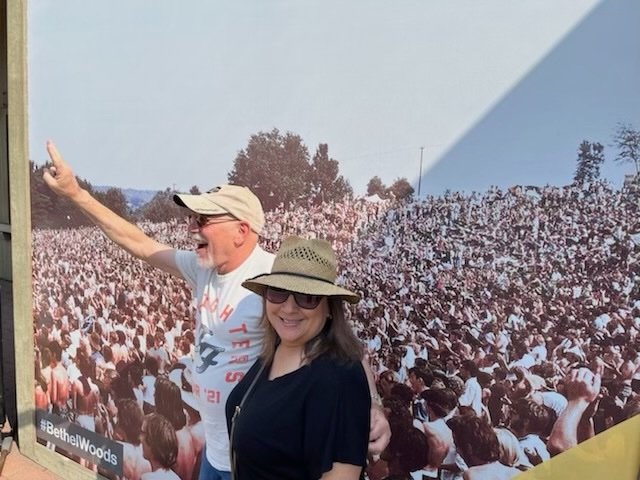
Music, too, has a way of prompting memories from various times in my life. Music is a powerful trigger for reminiscence and is being used to help those with dementia connect to pleasant memories.
The nostalgia brought about from anniversaries of significant cultural events, like the Beatles coming to America over 60 years ago or the 1969 Woodstock Music Festival, often inspires me to pull out old recordings and transport myself back to a time when I was first hearing those songs.
There is no real benefit in dwelling on the past in a morbid way. But conscious life review is a good thing. Preserving your past experiences in some way is important and a service to you and your friends and family. It can be done in many ways. One of the more enjoyable recent reads for me was reminiscence by Roger Angell, a 93 year old writer of great wit and insight. His essay for The New Yorker is well worth your time.
As you go through your days be open to the inspiration sparked by nostalgia. Do spend time reminiscing. Live your life fully and review it with an eye towards lesson learned and worth passing on. Your legacy is important and your story is worth telling.
- Home
- Holding Onto Nostalgia
- How Nostalgia Drives Reminiscence
